One, Two, Step: Where to Try Bulgarian Folk Dancing in Britain
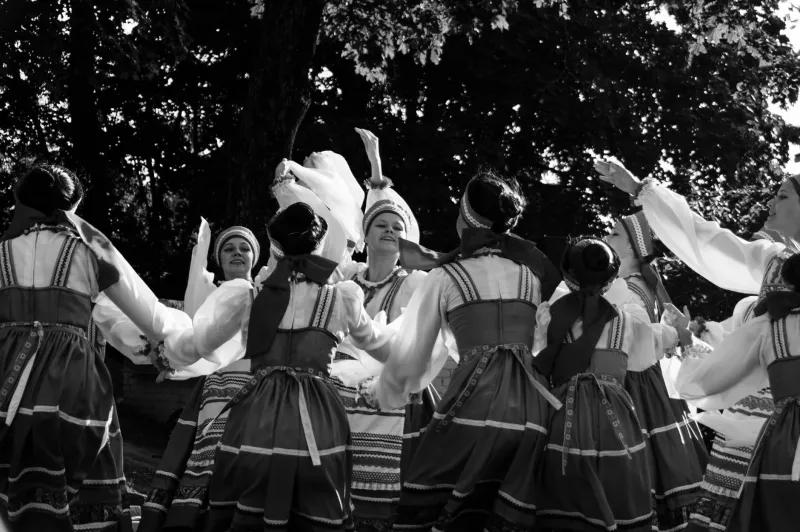
Ask someone who has never done it to picture Bulgarian folk dancing and they may imagine costumes, stage lights and complicated footwork. The reality is usually far more ordinary, and far more welcoming: a community hall, a Bluetooth speaker, a circle of people holding hands and someone at the front calling out the next step. Horo is not a performance you have to audition for. It is a social habit, and in the UK in 2026 there are more ways to join it than many Bulgarian families realise.
As of November 2026, the scene is patchy but lively. London has the widest choice, Birmingham and Manchester have steady groups, and smaller cities often have monthly or pop-up sessions run by volunteers. The trick is knowing where to look, and being willing to turn up without knowing anyone. Here at Sabor UK, we have heard the same thing from newcomers again and again: the first ten minutes are the hardest, and then someone hands you a glass of something and tells you which way to turn.
First, what actually happens at a horo night
Most regular sessions are relaxed. You will find a mix of Bulgarians who grew up dancing, Brits with Bulgarian partners, children running around, and complete beginners who saw a video online and decided to give it a go. The music may be recorded or live, depending on the group. Someone usually leads from the front or the side, demonstrating steps in a low-key way. You do not need to know the difference between a pravo and a paidushko before you arrive. You just need to follow the person to your right and keep moving.
The atmosphere varies by group. Some are family-focused, with sessions starting at 6pm and finishing before bedtime. Others are later, louder and aimed at adults. University societies tend to be younger and more informal. Church hall groups can be more traditional. None of these is better than the others; they simply suit different people.
London: the biggest choice, and the easiest place to hide at the back
London has the largest Bulgarian population in the UK, and the folk dance scene reflects that. You will find beginner-friendly horo evenings in community centres, church halls and rented studios across the city, plus groups that focus on performance and folklore ensembles. Some run weekly, some fortnightly, some monthly. There are also Bulgarian restaurants and shops that host occasional dance nights, especially around holidays such as March 3 and Christmas.
Who it suits: almost everyone, but the best first step is to look for a session advertised as beginner-friendly or family-friendly. London groups can be large, which is good if you want to blend in, but it also means you may need to message ahead to ask which evening is best for a novice. Joining is usually a case of finding the group on Facebook or Instagram, sending a short message and turning up. Many sessions ask for a small contribution towards hall hire, usually a few pounds.
Birmingham: steady, sociable and family-heavy
Birmingham has a well-established Bulgarian community and a number of regular dance groups that meet in community halls and church spaces. The mood is often practical and sociable: people come with children, bring snacks, and stay for a chat after the dancing. You may find separate beginner sessions or a mixed-level evening where the first half is teaching and the second half is dancing.
Who it suits: families and anyone who wants a regular weekly rhythm rather than a one-off night out. Joining is usually through word of mouth, Bulgarian shops or local community groups. If you are shy, ask whether you can watch the first session. Most organisers will say yes.
Manchester: younger crowds and pub-back-room energy
Manchester has a smaller but energetic scene, with groups often linked to university societies, Bulgarian student networks and young professionals. Sessions may take place in community centres, rehearsal rooms or the back of a pub. The teaching style can be fast, but the crowd is usually forgiving.
Who it suits: students, younger adults and anyone who prefers a looser, more spontaneous atmosphere. Joining is often as simple as following a social media page and turning up. If you are completely new, message the organiser and ask which session is best for beginners; some groups run a short introductory workshop before the main dancing.
Edinburgh and Glasgow: small circles, warm welcomes
Scotland has a compact Bulgarian community, and dance groups tend to be friendly and informal. In Edinburgh, you may find sessions connected to university societies, cultural events or community halls. Glasgow has occasional horo evenings and pop-up workshops, often advertised through Bulgarian community Facebook groups. The smaller numbers mean you will probably be noticed, but that is usually a good thing: someone will show you the steps.
Who it suits: anyone who prefers a smaller group and a slower pace. Joining may require a bit more digging online. Search for the city name plus 'horo', 'Bulgarian dance' or 'Bulgarian folk' and check the most recent posts rather than the oldest ones.
Bristol, Leeds, Nottingham and beyond
Outside the biggest cities, the scene is often volunteer-run and event-based. Bristol has had family-friendly Bulgarian dance meet-ups; Leeds and Nottingham have seen pop-up sessions linked to community events and student groups. Cardiff and Southampton have smaller scenes that come and go depending on who is organising. The key is to check local Bulgarian community groups, shops and restaurant noticeboards, and to ask in parents' groups.
Who it suits: people who are happy to travel a little and to try a monthly session rather than a weekly class. Joining is usually informal: send a message, ask about the next date, and confirm whether the session is suitable for beginners.
What to wear, and what not to worry about
You do not need a costume. Comfortable clothes are fine: leggings, joggers, a T-shirt and a light jumper. Wear soft-soled shoes that let you pivot without sticking to the floor; trainers are usually acceptable, but heavy boots are not ideal. Bring water. Layers help because halls can be cold at the start and warm once the dancing begins. If you have long hair, tie it back. Leave dangling jewellery at home.
Do not worry about looking silly. Everyone makes mistakes, including people who have been dancing for years. The steps are repetitive, and the person next to you will usually guide you if you lose the pattern.
The unwritten etiquette of stepping into the circle
Wait for a gap in the circle and join there rather than pushing between two people mid-step. Hold hands lightly; you are not trying to win a tug-of-war. Follow the person to your right, especially if you are new. If you are completely lost, watch the feet of the person two places ahead. Do not film or photograph people without asking, especially children. If a session asks for a contribution, pay it without making a fuss. If you arrive late, wait for a break in the music before joining.
One more thing: do not apologise constantly. A quick smile and a shrug is enough. The whole point of horo is that the circle absorbs the wobble.
How to find your nearest group in 2026
Start with the obvious: search Facebook for 'Bulgarian dance [your city]', 'horo [your city]' and 'Bulgarian community [your city]'. Ask in local Bulgarian parents' groups, check noticeboards in Bulgarian shops and restaurants, and look at the events pages of Bulgarian cultural organisations. University Bulgarian societies often welcome non-students to their dance workshops. If you find an old listing, message the organiser anyway; many groups are bad at updating websites but quick to reply on social media.
Turn up with realistic expectations. You will not learn everything in one night. You will probably laugh, get a bit sweaty and meet someone who invites you back. That is the whole point.