Crust Fund: The Banitsa Bake-Off That Gets a Whole Town Talking
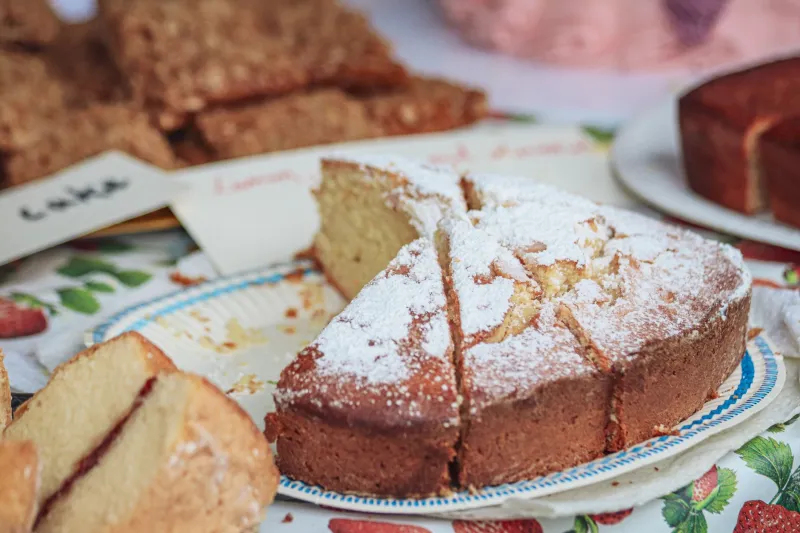
At Sabor UK, we spend a lot of time talking about the small things that make Bulgarian food feel like home. Banitsa is top of that list. It turns up at breakfast, at New Year, at the end of a long week and, in many British-Bulgarian households, whenever someone needs a bit of comfort wrapped in filo.
So here's a thought: what if the next tray of banitsa did a bit of good for the whole street? A banitsa bake-off is a friendly, slightly chaotic and very achievable way to raise money for a local cause. It works in a town hall, a church kitchen, a scout hut or a community centre. It gives British neighbours a reason to try something new. And it lets Bulgarian families share a tradition without making it feel like a private club.
Why banitsa works as a fundraiser
Banitsa is generous by design. One tray feeds plenty of people, it can be cut into small squares, and it costs relatively little to make. It also has a story. Everyone who bakes it has an opinion on the filling, the number of sheets, the amount of butter and whether the top should be crunchy or soft. That difference of opinion is exactly what makes a bake-off fun.
The other advantage is that banitsa is unfamiliar enough to be interesting but familiar enough to be comforting. A British neighbour who has never made it will still recognise pastry, cheese and a hot oven. You don't need a hard sell. You just need a plate, a label and someone saying, 'Go on, try the pumpkin one.'
Pick your venue and keep it simple
Start with the cause. A local food bank, a school library, a community garden or a warm hub all make sense. Then find a venue that already has a kitchen with sinks, surfaces and a way to keep food cool. Church halls and community centres are ideal because they are used to cake sales, toddler groups and slightly overambitious fundraising plans.
Check the venue's rules before you book. If you are selling or serving food to the public, ask your local council about food safety guidance and make sure you can label allergens clearly. You do not need to turn a bake-off into a paperwork marathon, but you do need to know what is in each banitsa. A simple label — baker's name, filling, contains dairy, contains egg, contains gluten — is enough to start.
A Sunday afternoon works well. Doors at 2pm, judging at 3pm, people's choice at 3.30pm, clear-up by 5pm. Keep the format short enough that children and grandparents both survive it.
The shopping list: filo, sirene and the British swap
For bakers, the main ingredients are straightforward. Frozen filo is widely available in UK supermarkets. Look for thin sheets rather than puff pastry. Bulgarian sirene is best found in Bulgarian and Eastern European shops, and many Turkish, Greek and Polish delis stock something similar. If sirene is hard to find, feta works as a practical swap — just remind bakers that it is saltier, so they may want to use a little less.
For the event itself, think beyond the pastry. You will need paper plates, napkins, small tasting forks, serving tongs, labels, a cash tin or card reader, a raffle prize table and a judging sheet. Ask a local Bulgarian shop to donate a hamper or a few packs of filo. Ask a bakery for bread. Ask the venue to put the kettle on. Small donations add up and make the day feel supported.
Set the categories — and the rules
A good bake-off has categories that reward effort rather than perfection. Try these:
- Most Nostalgic — for the banitsa that tastes like someone's grandmother is in the room.
- Best First Attempt — for the baker who had never folded a filo sheet before this month.
- People's Choice — decided by taster tokens or a simple show of hands.
- Best Seasonal Filling — pumpkin, leek, spinach or whatever is in season.
- Best Vegetarian — a useful category for sharing with a wider crowd.
Keep the rules short. Each baker brings one large banitsa, cut into small squares, with a label listing ingredients. Judges score on taste, texture and presentation, but the People's Choice category keeps the room involved. If you have children taking part, add a 'mini baker' category and let them decorate their own labels.
Three bakers, three reasons
The kind of people you will meet at a banitsa bake-off are the heart of the event. Here are three typical voices from the British-Bulgarian baking scene.
Ivana from Reading learned to make banitsa from her grandmother and still uses the same worn rolling pin. Her first solo attempt leaked butter across the oven, which is why she now enters the 'best first attempt' category with a smile and a spare tray. For her, the bake-off is a way to show her children that Bulgarian food belongs in public, not just at home.
Sam from Manchester is British, married to a Bulgarian, and makes a supermarket-filo version with feta and leek. He says the bake-off gave him permission to ask questions without feeling silly. His children now call banitsa 'the weekend pie', which is exactly the kind of quiet integration that makes a community feel real.
Dora from Cardiff is retired and makes a pumpkin banitsa every autumn. She enters the 'most nostalgic' category, but really she comes for the tea and the conversation. She is the person who will tell you to brush every sheet with butter and then tell you not to worry if you forget.
The money bit: turning pastry into pounds
Fundraising does not need to be complicated. Charge a small entry fee for bakers, sell taster tickets at the door, run a raffle and put out a donation jar. A simple model might be £5 to enter a banitsa, £3 for adult tasters, £1 for children, and £1 per raffle strip. If you have a card reader, use it. If you don't, ask the venue if they have one.
Set a modest target and publish the total afterwards. A bake-off with fifteen banitsas and sixty people can raise a few hundred pounds without much fuss. The point is not to rival a marathon. The point is to make a local cause feel connected to the people who live around it.
A sample running order
1pm: bakers arrive, label their banitsas, judges meet. 2pm: doors open, tasters begin. 2.45pm: judging in a side room. 3.15pm: People's Choice voting. 3.30pm: raffle and thanks. 4pm: announce the total and hand out silly certificates. 4.30pm: clear up together.
After the last crumb
Send everyone the recipes you collected, thank the venue and the donors, and post a few photos with permission. If it worked, do it again next year. If it didn't, change the date, move the room or cut the raffle. A bake-off is supposed to feel like a community, not a catering operation.
Banitsa has always been a food that brings people to the table. A bake-off just moves the table into the town hall for an afternoon. Bulgarian roots, British life, one community — and a very good reason to eat pastry for a cause.