Mavrud at the Kitchen Table: A Very British Guide to Bulgarian Wine
Bulgarian wine has a way of making a British kitchen feel bigger. Maybe it is the food that comes with it, or the fact that nobody in Bulgaria seems to treat a bottle as a test. Wine arrives with people, with plates, with someone saying 'just try this one'. That is the energy worth bringing into a UK home in 2026, whether you are Bulgarian, British-Bulgarian, or simply curious about the bottles sitting a few shelves away from the usual Pinot Grigio.
Why Bulgarian wine suits the British kitchen table
Britain has become much better at casual wine. We are comfortable with a midweek bottle, a Sunday lunch that runs long, and a table full of dishes rather than a strict three-course plan. Bulgarian wine fits that mood neatly. It is not built around ceremony. It is built around hospitality, and hospitality travels well.
The other reason is variety. Bulgaria has indigenous grapes that taste like nowhere else, plus a winemaking history that goes back far enough to make a wine label feel like a small history lesson. You do not need to know any of that to enjoy a glass. But a little context helps when you are standing in a shop wondering whether the dusty bottle with the Cyrillic back label is a bargain or a warning.
First, the bottles: what to look for in the UK
Start with the names. Mavrud is the headline red: dark, herbal, sometimes a little wild, with tannin that settles down when there is food on the table. Melnik is both a region and a family of wines, and Broad-leaved Melnik is the name to remember if you want the distinctive southwestern red. Rubin is a Bulgarian cross, often plummy and generous. Gamza is lighter and juicier, a good red for people who usually reach for white. Dimyat is a white with texture, and Pamid is another useful name to know when you are scanning labels.
On the back label, look for the region and the importer. Mavrud is closely associated with the Thracian Lowlands. Melnik comes from the southwest, near the town of Melnik. The Danubian Plain is a source of Gamza and whites, the Black Sea coast has its own style, and the Rose Valley is known for aromatic whites and roses. You will also see blends, which are often friendlier on the wallet and very useful for a first Bulgarian wine night.
Prices in the UK are generally kind. Expect to pay somewhere between £8 and £20 for most bottles worth putting on the table, with a sweet spot around £12 to £18. If you see a Bulgarian red at £7.99, buy one to try rather than six for a party. If you see a Mavrud at £15 from a merchant who can tell you who imported it, that is a much better start.
Supermarkets, delis and the art of the useful detour
Supermarket finds are real, but they are sporadic. Balkan weeks at Aldi and Lidl sometimes throw up useful bottles, and the bigger world-wine sections occasionally carry a Bulgarian red or white. Treat these as lucky breaks rather than a plan. If you build the whole evening around a supermarket bottle and it is not there, you will spend the first hour of your wine night driving to a retail park.
Balkan delis are the better detour. They often stock Bulgarian wine alongside sirene, lyutenitsa and banitsa, and the staff are more likely to have tasted what they sell. Independent wine shops are worth asking too, even if they do not have Bulgarian bottles on the shelf. Online merchants specialising in Eastern European wine have become easier to find, and they usually give you enough detail to choose between a Mavrud for a stew and a Melnik for a roast.
Check the vintage and the fill level if you are buying from a small shop. Bulgarian wine is not fragile, but it is not improved by standing next to a radiator for two years either. Ask how long it has been in stock. If the answer is a shrug, choose something else.
How to talk to an independent wine merchant without feeling like a beginner
Do not march in and ask 'Do you have Bulgarian wine?' as if it is a quiz. Ask for what you actually want. Try: 'I am looking for Bulgarian indigenous varieties — Mavrud, Melnik, Rubin, Gamza. Do you have anything from the Thracian Lowlands or Melnik?' That gives the merchant something to work with.
If the answer is no, ask what they would order if they were putting together a Balkan selection. Give them a budget. Tell them what you are eating. A merchant who knows you are pairing the bottle with grilled meat and shopska salad will make a better guess than one who thinks you want a gift bottle. Ask about the importer, too. A good importer is often a better guarantee than a fancy label.
And if they have exactly one Bulgarian bottle, buy it. Then ask them to keep an eye out for more. Independent shops remember customers who are specific and polite, and they are often willing to add a bottle to their next order if you show genuine interest.
The Sabor UK tasting flight: four bottles, one long table
A Bulgarian wine night does not need a sommelier. It needs a theme, small pours and food that keeps people at the table. This is a simple flight that works for four to eight people.
Bottle one: a chilled Bulgarian white, Dimyat if you can find it, or a white blend. Serve it at around 8–10°C with shopska salad and bread. Keep the pour small — about 50ml — so people can taste without committing.
Bottle two: a Bulgarian rosé or a lighter red such as Gamza or Pamid. Serve it cool, around 12–14°C, with lyutenitsa, roasted peppers and more bread. This is the bottle that wins over guests who think they do not like red wine.
Bottle three: Mavrud. Decant it for 30 to 60 minutes if you have time, and serve it at 16–18°C with grilled meat, roasted peppers or a bean stew. This is the centrepiece, so give it a little space on the table and a little space in the conversation.
Bottle four: Melnik, or a sweet Bulgarian wine if you find one. Serve a dry Melnik at around 16°C with sirene and walnuts, or chill a sweet wine and pair it with a walnut banitsa. Finish there. Four bottles is plenty for a tasting; the point is the table, not the tally.
Put a small card next to each bottle with the grape, the region and one sentence about what to expect. Skip the scoring sheets unless your guests are the sort who genuinely enjoy them. The best Bulgarian wine nights are not judged. They are eaten.
Food that makes the wine make sense
Shopska salad is the obvious place to start: tomatoes, cucumber, peppers, onion and a generous grating of sirene. It is fresh, salty and friendly, and it makes almost any Bulgarian white taste better. A warm cheese banitsa is a brilliant opener with a white or rosé, while a walnut banitsa can carry a sweet Melnik-style wine at the end of the evening.
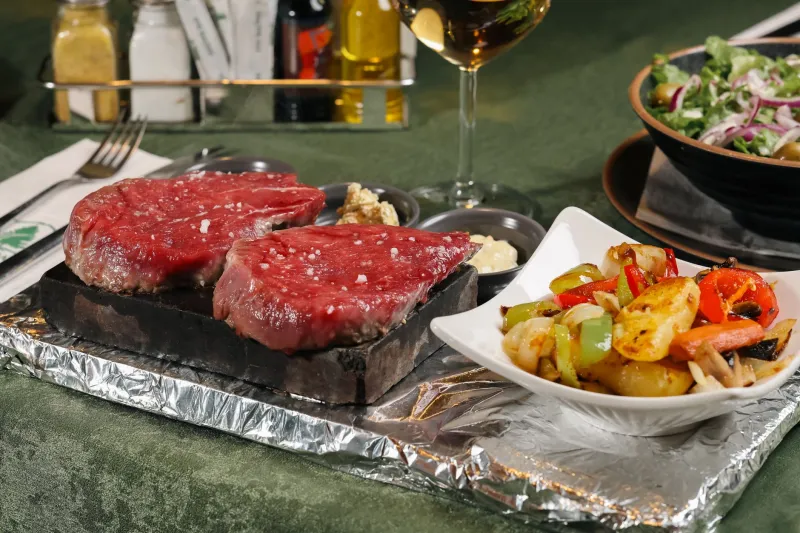
For the reds, think grilled meat and roasted vegetables. Kebapche, kyufte, lamb chops, peppers, aubergine and a spoonful of lyutenitsa will do more for a Mavrud than any fancy sauce. Keep the food coming in waves rather than serving one heavy plate. Bulgarian hospitality is rarely about precision. It is about abundance, and a little goes a long way when the wine is the doorway.
Regions and dates to watch
If you want to build a bottle list, learn a few regions. The Thracian Lowlands are Mavrud country. Melnik is for the southwestern reds. The Danubian Plain is good for Gamza and whites. The Black Sea coast has its own white styles, and the Rose Valley is worth exploring for aromatic wines and roses.
In 2026, keep an eye on Bulgarian community listings, local delis and university Balkan societies for diaspora-friendly tastings. Trifon Zarezan on 14 February is the vine-pruning festival, and it is a natural excuse for a Bulgarian wine night. Harvest season in September and October is another good hook. You do not need a formal event to start one, though. A few bottles, a bowl of shopska and a message to the neighbours is enough.
The long table is the point
Bulgarian wine is not a secret handshake. It is a sociable doorway into heritage, and the UK is a good place to open it. You do not need matching glasses or a tasting certificate. You need enough chairs, a little patience and the willingness to let the evening run past its scheduled finish.
So start with one bottle. Ask one question at the deli. Invite one friend who has never tried Mavrud and one who grew up with it. Put the food in the middle. The wine will do the rest.