Basslines and Brass: Where to Catch Live Bulgarian Music in Britain in 2026
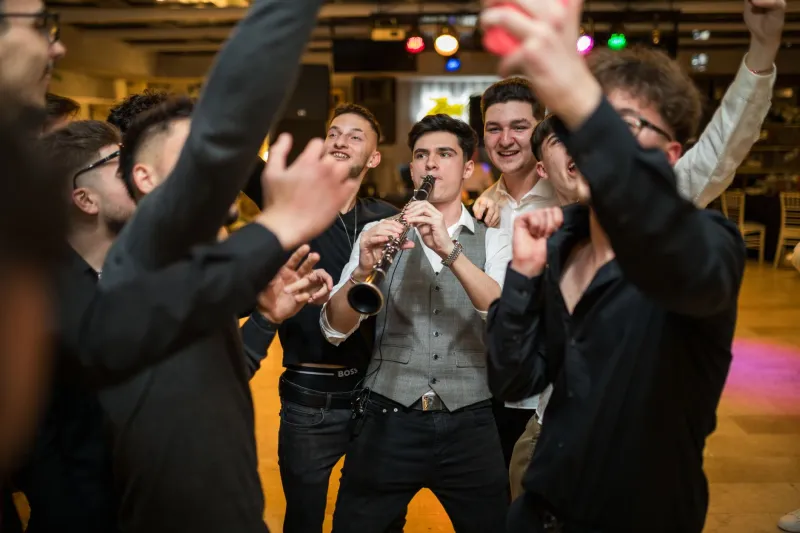
There is a particular sound that hits you in the car park before you even reach the door: a clarinet running up a scale it has no business running up, a keyboard holding a chord for slightly too long, and then the drums landing. If you grew up Bulgarian, you know it instantly. If you didn't, you're about to have a very good night.
Live Bulgarian music in Britain in 2026 is not a single scene. It is a loose network of restaurant residencies, hired community halls, club nights and family celebrations, stitched together by group chats and shop noticeboards. Nobody centralises it. That is half the charm and most of the frustration.
The map, roughly
London remains the centre of gravity, simply because of numbers. The venues cluster around the places where Bulgarian communities have settled: stretches of Green Lanes, pockets of Walthamstow and Barking, the quieter residential roads of Southgate, Harrow and out towards Ilford. A lot of it happens in rooms that were never designed as music venues — a function space above a pub, a restaurant that pushes the tables back at half nine, a hall attached to a church.
Outside the capital, the pattern repeats on a smaller scale. Birmingham and the Black Country have a steady circuit. Manchester, Leeds, Southampton, Norwich, Bristol and the Central Belt of Scotland all have communities big enough to fill a hall a few times a year. In smaller towns, the event is often a one-off: a name day party, a charity evening, a Bulgarian school fundraiser with a hired band and a cash bar.
The other reliable strand is the cultural calendar. Baba Marta celebrations in March, March 3rd gatherings, Christmas and Easter concerts, and Bulgarian Cultural Institute programming in London all regularly pull in live performers — sometimes touring artists from Bulgaria, sometimes excellent semi-professional musicians based here.
Three kinds of night you will actually find
The restaurant gig
A singer, a keyboard player and backing tracks. Maybe an accordion if you're lucky. It starts around nine, peaks around half eleven, and is built almost entirely around requests. Expect a mix of chalga, older pop-folk, Bulgarian covers of things you half-recognise, and one or two tracks that exist purely so somebody's uncle can sing along.
The club night
A DJ rather than a band, a bigger room, a later finish. These tend to be advertised on social media a few weeks out and sell out fast in the bigger cities. The music leans harder into chalga and modern pop-folk, and the dance floor has its own grammar — the shoulder-led kjuchek shuffle, the small circle that forms and reforms, the person who is very good and the twelve people copying them badly.
The hired hall
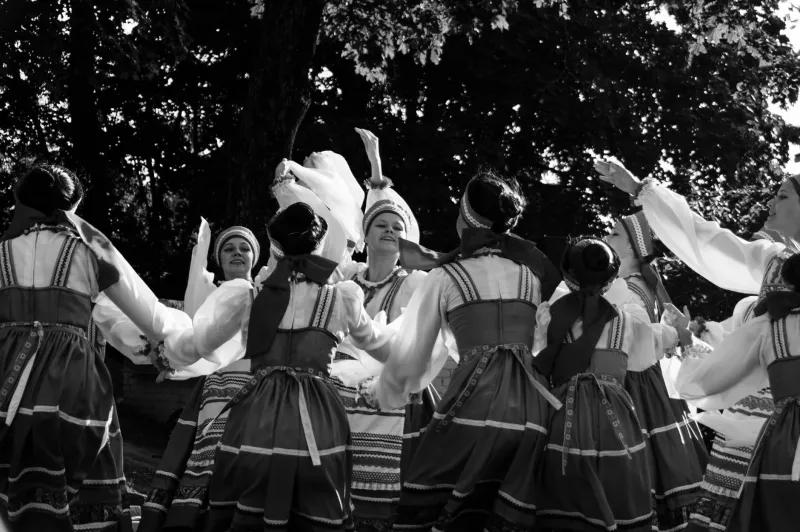
This is the big one. A wedding, a christening, a milestone birthday, a sватба for a couple who got married quietly at a registry office and are now doing it properly. A full svatbarska grupa — brass, clarinet, accordion, drum kit, two or three singers — plus a long table of food, a stack of plastic chairs, and a horo that starts with eight people and ends with forty.
The etiquette, translated
If it's your first one, a few things will make the night easier.
- Arrive late. The stated start time is aspirational. Turning up forty-five minutes after doors is normal; turning up on time means helping stack chairs.
- Bring cash. Bars in hired halls are often cash-only, and so are requests.
- Requests are a transaction and a compliment. Write the song on a napkin, add a note, hand it over with a tip. The band will play it in roughly the order the money arrived.
- Join the horo at the end of the line. Hold hands or link pinkies. Copy the person in front. Nobody is marking you.
- Don't film other people's children to post online. Photograph your own table.
- Clap the clarinet solo. All of it. Even the long one.
- Children run the floor until about ten, then families peel off and the night changes register. If you have a babysitter booked, stay for the second half — that's when the good stuff happens.
Dress is smart-casual with an emphasis on shoes you can actually move in. Ear protection is not a joke; these rooms are loud and the ceilings are low.
Why the second generation keeps turning up
Ask a twenty-something British Bulgarian why they're there and you'll get a few answers. Some came for their parents. Some came because a friend dragged them and they discovered they knew every word to songs they'd never consciously learned. Some are deep in a rediscovery phase that started with a wedding video on their phone and ended with them learning the horo steps on a Tuesday night in a leisure centre.
That's what these nights actually do. They take a playlist that used to live only in a car on the way to a family party and put it in a room with a bar and a sound system. Language, dance, food and the specific humour of a Bulgarian table all arrive in the same package. Nobody has to be taught anything; you just stand near the speakers long enough.
Finding one near you
There's no single listings site, so work the edges. Bulgarian shops and bakeries often have a flyer taped by the till. Community associations and Saturday schools post on Facebook. Viber and Telegram groups move information faster than anything public. University Bulgarian societies run their own nights in term time. And if you ask around in the Sabor UK community, someone will almost always reply with a date and a postcode.
One last thing. If you get invited to a hall party by a colleague or a neighbour, say yes. Bring a bottle, take a plate of something, and expect to be on your feet before the night is out. That's not an accident of the evening. That's the point of it.