Red Thread, White Thread: Bringing Martenitsa into Your Child’s UK Primary School
Every spring, Bulgarian families in Britain face a small but familiar question: how do you explain a piece of red-and-white thread to a school that has never heard of Baba Marta? It is not a religious festival, it is not a national holiday in the UK, and it does not need a full assembly. But it is a lovely way to connect children with heritage, and most primary schools are far more open to small cultural moments than parents expect.
This guide is for the 2026–27 school year, but the approach works whenever 1 March comes around. The aim is simple: a short, friendly email, a clear teacher note, and a 20-minute craft session that fits the classroom rather than disrupting it.
Start with the one-minute version
Baba Marta is the grandmother figure linked to the arrival of spring in Bulgarian folklore. On 1 March, people give each other martenitsi — small red-and-white tokens, usually tied on the wrist or pinned to clothing. The red and white strands are symbols of health, luck and new beginnings. Traditionally, you wear your martenitsa until you see a blossoming tree or a stork, then tie it to a branch. In Britain, families often adapt that to the first local blossom, the first clearly spring-like day, or the end of March.
The key point for a teacher is that this is a cultural custom, not a religious observance. It is about spring, friendship and wishes for good health. That makes it easy to fit alongside seasonal topics, art, design and technology, speaking and listening, or the wider work schools do on communities and belonging.
The email that actually gets a yes
Keep it short. Teachers are busy, and a long essay about folklore is more likely to be filed under later than read on a Monday morning. Offer something concrete: a short slot, a ready-made activity, and no expectation that the teacher has to research anything.
A workable template looks like this:
Dear [Teacher’s name],
I am [your name], parent of [child’s name] in [class]. On 1 March, Bulgarians mark Baba Marta by giving each other small red-and-white threads called martenitsi. It is a cultural spring tradition rather than a religious one.
I would love to offer a short 20-minute craft session for the class, either led by me or with a kit and instructions you can use yourself. It links easily to art and design, fine motor skills, and talking about spring festivals in different communities. I am happy to send a one-page teacher note first, and to follow the school’s visitor and safeguarding procedures.
Would this be possible? I am flexible on timing.
Many thanks, [Your name]
That last line matters. Ask about visitor procedures before you turn up with a bag of beads. Some schools will want you to sign in, wear a badge, or be supervised in the classroom. Follow their policy rather than assuming.
The printable teacher note
Copy this into an email or print it as a single page. It gives the teacher the essentials without turning them into a folklore specialist.
Baba Marta and martenitsi: a short note for the classroom
What is it? Baba Marta is a Bulgarian spring tradition. On 1 March, people give small red-and-white tokens called martenitsi. They are symbols of health, luck and the arrival of spring. The custom is cultural, not religious.
What will we make? A simple martenitsa using red-and-white yarn, ribbon or pipe cleaners. Children can make a wrist band, a backpack tag or a bookmark. No needles are needed.
What does it link to? Seasonal change, art and design, fine motor skills, speaking and listening, and learning about different communities in the UK.
What do we need? Pre-cut red and white yarn or ribbon, beads, safety pins, scissors and a few adult helpers. Please let me know about any allergies or access needs.
Inclusion note: Children do not have to wear the martenitsa. They can make one for a bag, a bookmark or a card. The activity is about spring wishes and friendship, so every child can take part without needing to share a family tradition.
A craft session that fits a primary classroom
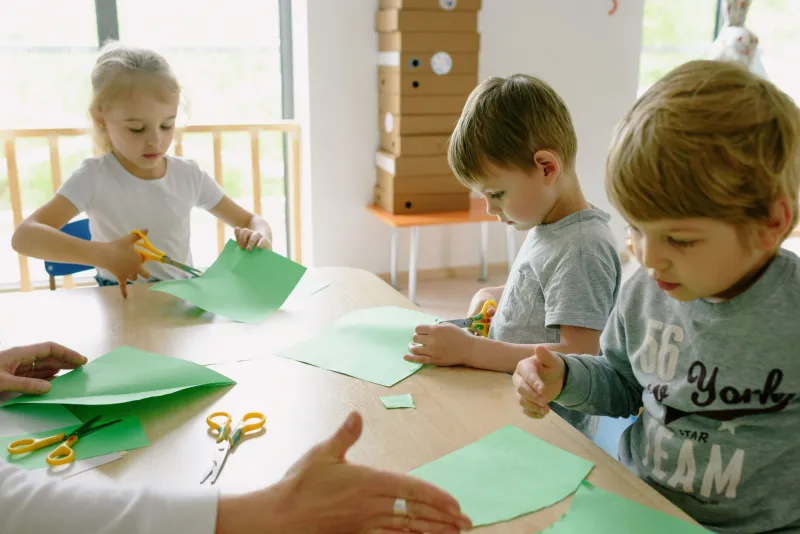
Twenty minutes is plenty if you set it up as stations. Pre-cut the yarn at home. Put red and white strands in separate trays. Add a small bowl of beads and a few safety pins for older children. Demonstrate one simple method: hold two strands together, twist them, tie a knot, add a bead, and tie again. That is it.
For younger children, pipe cleaners are easier than thread. Twist one red and one white pipe cleaner together, bend it into a bracelet, and add a bead if it will stay. For older classes, a bookmark with a red-and-white tassel works well and avoids the wrist-fitting problem altogether.
UK craft-shop substitutions are easy. Hobbycraft, The Range and local haberdashery shops usually sell red and white embroidery floss, DK yarn, ribbon and pipe cleaners. Garden centres often stock red-and-white baker’s twine, which is perfect for simple knots. If you cannot find thin thread, use white wool and red ribbon. The tradition is not about a specific brand or fibre; it is about the red and white pairing.
Keep safety boring and sensible. Avoid needles. Use large beads for younger children. Check school guidance on choking hazards. Ask about allergies before bringing in any scented or dyed materials. And keep a few spare pre-made martenitsi for children who find the twisting tricky or who arrive late.
Making it inclusive for every child
Not every family celebrates spring in the same way, and that is fine. Present the martenitsa as one Bulgarian tradition among many. Invite children to make a spring wish, a friendship tag or a bookmark. Let them choose whether to wear it. Some children do not like things on their wrists, and some may prefer to clip it to a bag.
Avoid making anyone feel that they must share a family story or explain their own background. The craft should be a low-pressure invitation. If a child asks why red and white, keep the answer simple: they are colours of health and new beginnings in this tradition. If a child asks whether it is magic, say no — it is a custom, like making a wish or giving a card.
It also helps to send a short note home afterwards. Thank the teacher, leave the spare materials, and offer to come back another year. Small traditions grow through repeat invitations. One classroom session will not make Baba Marta a British school calendar fixture, but it can make a child feel seen and give their classmates a pleasant memory of red thread, white thread and the first hint of spring.