When the Bells Come Out: Kukeri, British Streets and the Art of Friendly Noise
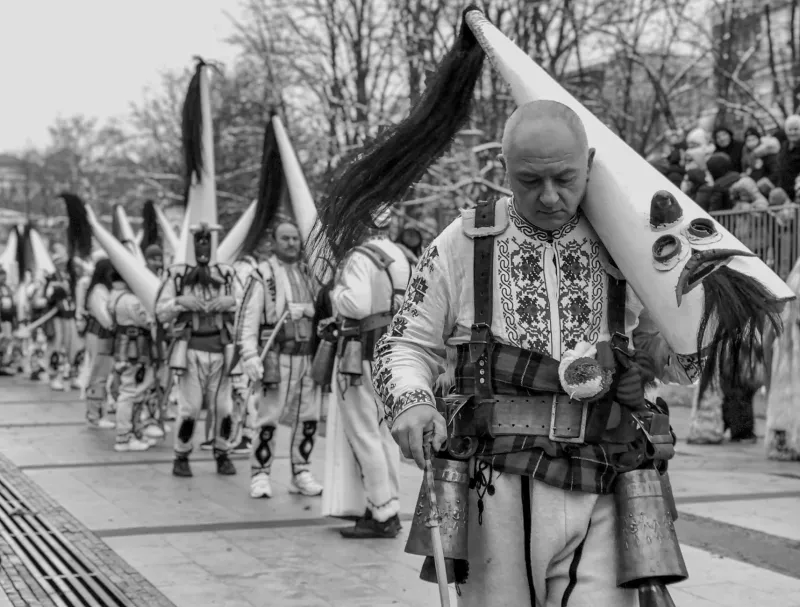
Kukeri don’t really do quiet. They arrive with bells, clacking wood, wool, feathers and a look that says winter needs a firm talking-to. In Bulgaria, the masked mumming traditions tied to kukeri and survakari are a familiar part of the cold months, especially around New Year and the run-up to spring. In Britain, they are still a niche sight — but a growing one, thanks to diaspora groups, folk dance ensembles and families who want their children to feel the tradition rather than just read about it.
That’s the key thing. Kukeri are not a museum exhibit. They are meant to move, make noise, visit people and bring a bit of luck. If you are in the UK and curious about where to hear the bells in late 2026 and early 2027, or you fancy organising something small on your own street, this is a good place to start.
What Kukeri Are Actually For
The short version: masked figures, often male in the traditional village versions, dress in heavy costumes, animal skins or thick blankets, and carry large bells. They move through the community to drive away bad spirits and welcome fertility, health and a good year ahead. Different regions have their own names, costumes and timing. Kukeri is the word most people know, but you will also hear survakari, babugeri, dzhamalari and other local terms depending on where a family or group comes from.
The masks matter, but they are not the whole point. The noise matters. The visiting matters. The idea that a community makes a bit of a racket together at the darkest point of the year — that is the bit British neighbours tend to understand quite quickly, especially once you mention mumming plays, wassailing or the Mari Lwyd in Wales. There is a shared folk logic here: winter is long, so let’s make some noise and share food.
Where the Bells Ring in Britain
There is no single national kukeri calendar in the UK, so the honest answer is: look locally and ask around. Bulgarian cultural associations, folk dance groups, Orthodox parish notices, university Bulgarian societies and community centres are usually the first to know. Some groups hold kukeri-inspired workshops or New Year gatherings; others appear at folk festivals, museums or multicultural winter events.
Your best route is to check community listings and social media groups in late November and December 2026, then again in January 2027. The traditional Surva festival in Pernik, Bulgaria, falls at the end of January, and that date often prompts UK-based groups to organise something nearby — a costume meet-up, a dance evening or a family workshop. If you are near a city with a Bulgarian shop or bakery, ask there too. Shop noticeboards are still one of the best low-tech event guides in the diaspora.
If you cannot find a public event, do not treat that as a dead end. Kukeri season is a good excuse to start something small. A front-garden bell-shaking, a community hall craft afternoon or a short appearance at a school winter fair can all work.
Bringing Kukeri to Your Street Without a Council Incident
A full village-style procession is not the starting point. A friendly, contained event is. Pick a clear time window — say 3pm to 4pm on a Saturday — and tell neighbours in advance. A simple note through the door works: “We’re marking a Bulgarian winter tradition with bells and masks. Expect some noise between 3 and 4, then tea and biscuits. You’re welcome.”
If you are using a public street, pavement or park, check with your local council about any permission needed for a procession or amplified sound. Keep it low-key and non-commercial. If you are indoors, check the venue’s insurance and capacity. For a community group, public liability insurance is worth sorting before you invite the public. And do a basic risk assessment: heavy bells, trailing costumes, hot glue, small children and dark afternoons are all manageable, but they need a thought first.
Noise is part of the tradition, but so is neighbourliness. Keep bells away from very young children’s ears, use daytime hours, and avoid surprise appearances outside people’s windows. The goal is friendly noise, not a noise complaint.
Mask-Making for Kitchen Tables and Classrooms
You do not need a full animal-skin costume to introduce the idea. For children, a cardboard mask base, elastic, wool, fabric scraps, feathers and a few small bells can be enough. Make sure bells are securely sewn or tied on, and skip heavy masks for little ones. A decorated headband with a bell or two is often more practical than a full face mask.
If you are making masks at home, talk about what the colours and materials mean in different regions — wool for warmth, bells for noise, animal shapes for fertility and protection — but keep it light. The moment it feels like a school worksheet, you have lost the room. Let children make something a bit odd and noisy. That is the spirit.
Explaining It to Neighbours and Schools
With schools, offer a short, clear explanation first. Kukeri are not monsters; they are winter visitors who make noise to chase away the bad and welcome the good. Show a short video clip if you have one, then do a simple craft. For reception and key stage one, avoid full-size scary masks until you have shown photos and explained the context. Offer a smaller, friendlier version — a bell bracelet or a card mask — and let children opt in.
It also helps to place kukeri alongside British winter folk customs. Teachers often relax when they see the cross-cultural link: mummers, wassailers and the Mari Lwyd all use disguise, noise and house-visiting in the cold months. That does not make the traditions the same, but it gives British neighbours and schools a familiar doorway into the idea.
A Calendar for Late 2026 and Early 2027
Think of kukeri season as a stretch, not a single day. From late November 2026, groups may start planning costumes and workshops. Around New Year, expect small gatherings and family visits. In January 2027, interest often peaks because of Surva, and folk dance groups may hold events or screenings. By February, carnival and spring-welcoming customs take over.
If you are organising, book a hall early, keep the first event small, and partner with an existing Bulgarian group if you can. If you are attending, ask before taking close-up photos of masked participants, especially children, and be ready to join a dance circle. Kukeri are not a photo opportunity first and a tradition second.
Keep It Alive, Not Under Glass
The best way to bring kukeri to Britain is to let them be a bit unruly, a bit communal and very much alive. That means noise with consent, masks with meaning, and events where British neighbours are invited in rather than kept at a polite distance. Whether you find a group already ringing bells in a UK hall or make a cardboard mask at your kitchen table, the tradition works best when it is shared — and when everyone knows roughly when the noise will start.