Reel Talk: Finding Bulgarian Cinema in Britain in 2026 — and Hosting a Film Night That Works
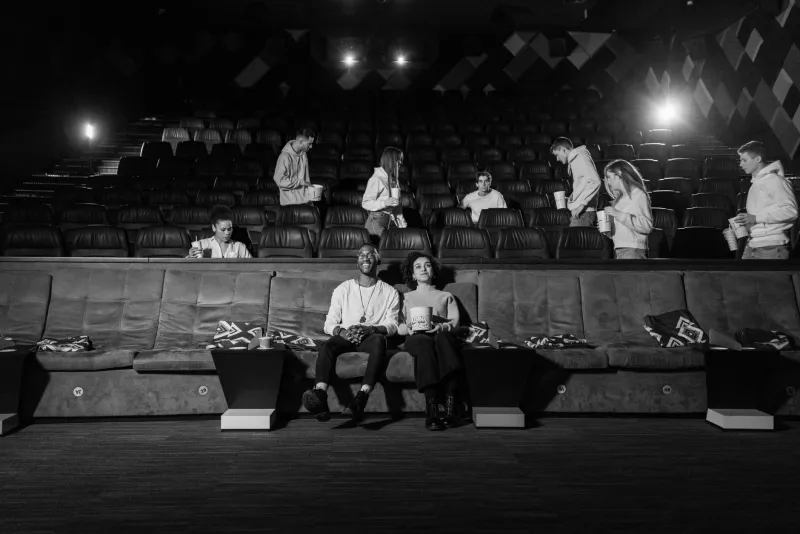
Bulgarian cinema in Britain is not exactly on the high street. It turns up in festival strands, independent cinemas, university rooms and the occasional community hall where someone has persuaded a local Bulgarian association to hire a projector. That is not a weakness. It is an invitation to become the person who knows where the good screenings are — or the person who hosts one.
Where Bulgarian films surface in the UK
Start with the bigger festivals. BFI London Film Festival regularly includes Central and Eastern European titles, and the BFI Southbank runs seasons and retrospectives that can pull in Bulgarian classics or new work. The Barbican, ICA and selected Curzon and Picturehouse venues sometimes pick up Balkan films, especially documentaries and award-winners. Regional festivals matter too: Glasgow Film Festival, Edinburgh International Film Festival, Manchester Film Festival, Sheffield DocFest and Encounters in Bristol are all worth watching for Bulgarian titles and Balkan-focused strands.
Do not ignore the smaller rooms. University Slavonic and film departments, local film societies and Bulgarian community organisations often screen films with subtitles and a discussion afterwards. These events are less glossy than a West End premiere and usually much easier to actually get a ticket for.
Streaming: the quiet route
For home viewing, MUBI is the most reliable curated platform for Balkan cinema, though titles rotate. BFI Player occasionally has Bulgarian films and documentaries. Klassiki focuses on Eastern European and Soviet cinema and is worth checking for Bulgarian classics. DAFilms is strong for documentary, and Netflix and Amazon Prime have a small, shifting selection — search the Bulgarian title as well as the English one. If a film is on YouTube, check whether it is an official channel before you plan a public screening; “it was free online” is not a licence.
Host your own screening — the legal bit first
At home, with friends, a legally purchased DVD or a personal streaming subscription is usually fine. In a hall, church room or community centre, you are running a public screening, and that means permission. Contact the UK distributor or rights holder, explain that it is a community event, and ask what licence or fee applies. Do not plug a personal Netflix account into a projector for a ticketed event. Do check DVD region codes and whether the disc has English subtitles. If you are using a streaming platform, ask whether it offers public performance rights; most do not.
The practical checklist
- A projector or large screen with the right cables and adapters.
- A sound system that can handle dialogue, not just music.
- English subtitles that are actually visible from the back row.
- A test run at the venue, ideally on the same laptop you will use.
- A backup copy of the film if the licence allows it.
- Seating, accessibility, and a plan for latecomers.
- Someone to introduce the film in two minutes, not twenty.
Snacks that start conversations
A Bulgarian film night without food is just a dark room. Keep it simple: banitsa cut into squares, sirene and lyutenitsa with bread, a shopska salad in small bowls, and maybe a bowl of popcorn dusted with paprika and chubritsa for the British guests who need a familiar format. Boza and ayran are good non-alcoholic options; if you serve rakia, check the venue’s alcohol licensing rules first. Label dishes clearly. “This one is cheese pastry” prevents a lot of anxious hovering.
Conversation starters for mixed audiences
After the film, resist the urge to ask, “Did you like it?” It is a conversation killer. Try: “Which character felt most familiar to you?” “What did the film assume the audience already knew?” “How would this story work if it were set in a British town?” and “Was there a joke or insult that did not translate?” For Bulgarian guests, ask what the film got right about the country; for British guests, ask what surprised them. Keep it light and neutral — this is a community evening, not a seminar.
A sample 2026 film-night plan
Doors at 6:30pm. A two-minute welcome at 7pm. Film at 7:15pm. Discussion at 9pm. Food at 9:30pm. Choose something under two hours if you want a real conversation afterwards. Blaga’s Lessons is powerful but heavy; Cat in the Wall is stranger and more playful; Mission London is an easy crowd-pleaser for a mixed audience. Watch the trailer first, check the subtitles, and make sure the tone suits the room. A good film night is not about showing the most obscure film you can find. It is about sending people home with one scene they want to talk about on the bus.