Two Countries, One Blessing: How UK Bulgarian Families Choose Their Kumovi
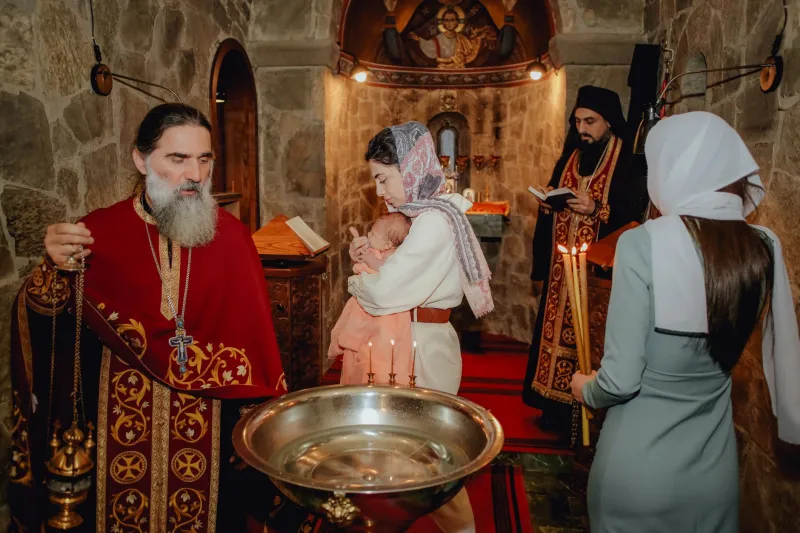
Ask a Bulgarian family in Britain about kumovi and you will usually get a story. Sometimes it is warm and funny. Sometimes it is the story of the aunt who did not speak to anyone for six months. Either way, the role matters. Kumovi are not simply godparents in the formal, slightly distant British sense. They are spiritual kin: people who stand beside you at a baptism or a wedding, who become part of the family furniture, and who are expected to remember birthdays, name days and the odd important milestone.
That is straightforward enough when everyone lives in the same town. It gets more interesting when your guest list includes a cousin in Plovdiv, a best friend in Manchester, British in-laws in Leeds and a priest who would like a clear answer before the service. In 2026, choosing kumovi across two countries is less about following a rigid rulebook and more about keeping a meaningful tradition alive without turning it into a family referendum.
What Kumovi Actually Sign Up For
In the Bulgarian Orthodox tradition, the kum at a baptism is the person who stands as sponsor, recites the creed and makes promises on behalf of the child. For a wedding, the kumovi are the witnesses and the couple’s moral support, often a married couple themselves. The relationship does not end when the candles are blown out. It continues through visits, celebrations and the general business of being known as kum and kuma.
For mixed Bulgarian-British families, the first practical step is to separate the sacred from the social. A British friend can absolutely be a kum, but if the ceremony is Orthodox, the priest will usually want to know that the person is baptised and comfortable with the format. Rules vary by parish, so ask early rather than discovering halfway through the planning that your chosen kum needs a certificate, a conversation or a crash course in what to say. A good priest will explain the essentials without turning it into an exam.
It also helps to be honest about expectations. Will your kum be expected to host a big lunch? To travel to Bulgaria for a second celebration? To remember the child’s name day? In many families, these things are assumed rather than discussed. That is where quiet resentment begins.
The Guest List Problem
Cross-border kumovi choices often get tangled up with travel logistics. One family member lives ten minutes away and can attend every school concert. Another lives in Varna and can manage one visit a year. It is tempting to choose the person who is simply available. But availability is not the same as commitment, and proximity is not the same as affection.
A useful question is not who can make the baptism, but who will still be in the child’s life in ten years. That might be a British neighbour who has become honorary family. It might be a Bulgarian cousin who sends a card every Baba Marta and calls on name days. It might be a couple split between London and Sofia, which is increasingly common in diaspora families.
There is also the matter of family politics. Parents may have opinions. Siblings may assume they are the obvious choice. In some families, there is an unspoken expectation that a brother or sister will do the honours. If you go in a different direction, say so personally and early. A phone call is better than a group chat announcement. Explain what you value about the person you have chosen, and make it clear that you are not ranking relatives. It will not always prevent hurt feelings, but it usually stops them from growing roots.
Two Countries, One Ceremony
One London couple I know chose a British friend as kum for their daughter’s baptism. The friend had no Bulgarian, no Orthodox background and a mild fear of being asked to sing. But she had been part of the couple’s life for years and had shown up for every difficult moment. The Bulgarian grandmother was initially puzzled. By the end of the lunch, she was teaching the new kuma how to say “chestita baba Marta” and pressing extra banitsa into her hands. The tradition bent, but it did not break.
Another family did the opposite. They chose a cousin in Sofia as kum, held the baptism in Bulgaria and then hosted a small UK celebration a month later for friends who could not travel. The kum could not be at the British lunch, but a video call was arranged, photos were printed and the child now knows exactly who lights a candle for her. It was not the traditional single-event model, but it kept the relationship at the centre.
Etiquette for Mixed Weddings and Baptisms
If your kumovi are British, explain the role in plain English. Tell them what happens during the service, whether they need to stand, hold a candle or say anything, and what the family expects afterwards. A short bilingual order of service is a small kindness that pays off handsomely. If your kumovi are Bulgarian and your British in-laws are attending, do the same in reverse. Nobody likes feeling like an extra in a ceremony they do not understand.
Be clear about costs. Travel, outfits, gifts and post-ceremony meals can add up, and assumptions about who pays what vary. Bulgarian custom often involves the kumovi giving gifts to the couple or child, but there is no single rule that covers every family. Ask, rather than guess.
And please, do not ambush anyone with a public request at a party unless you are absolutely certain they will say yes. A warm invitation in private gives everyone room to think, including the person who might love you dearly but quietly panic at the thought of a Bulgarian Orthodox service.
Keeping the Connection Alive in 2026
Whether your kumovi live in Birmingham or Burgas, the relationship needs maintenance. That might mean a monthly video call, a shared photo album, a card on name days or an annual visit. If your kumovi are British, introduce them gently to the bits of Bulgarian life that matter to you: the food, the martenitsa, the way you greet elders, the fact that yoghurt is a legitimate component of dinner. If your kumovi are in Bulgaria, keep them involved in the small stuff, not just the big ceremonies.
Choosing kumovi will never be a perfect science. Families are messy, borders are real and everyone has an opinion. But the heart of the tradition is not the seating plan or the size of the lunch. It is the promise that someone else will stand with you and your child, across countries if necessary. Get that part right, and the rest is just logistics.
In 2026, that is still a blessing worth organising.